
Mountain Bike Language Explained
If you’re new to mountain biking, it can sometimes feel like riders are speaking another language. Words like berm, dropper post, flats and hero dirt are common on trails, in bike shops, on social media and during coaching sessions.
Understanding mountain bike terminology helps you ride more confidently, follow conversations on the trail, and get more from your coaching sessions.
Below is a guide to some of the most common MTB terms and trail slang explained.
A-Line and B-Line
Many trail features provide two options:
A-Line
The harder, more technical route that might include bigger jumps, drops, or rock features.
B-Line
The easier route that allows riders to bypass the technical feature.
At Sugar Bag, the different lines are signposted really well.
Berm
A berm is a banked corner built into a trail. Instead of turning on flat ground, the outside of the trail is raised, allowing riders to carry more speed through the corner while maintaining traction.
Dropper Post
A dropper seatpost allows riders to lower or raise their saddle while riding using a handlebar lever.
Lowering the saddle gives you more freedom to move your body when descending or riding technical terrain. In our opinion, it is one of the best investments.
Flats
Flats refer to flat pedals that have a large platform and metal pins for grip.
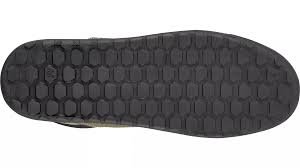
They are paired with mountain bike shoes that have sticky rubber soles. Many riders prefer flats while learning skills because they allow you to quickly remove your foot if needed.
Hero Dirt
Hero dirt describes perfect trail conditions, where the soil is slightly damp and compact. It’s a dark, rich colour.
These conditions provide incredible traction and allow riders to corner with confidence.
Rock Garden
A rock garden is a technical section of a trail filled with rocks or boulders.
Riding rock gardens requires good line choice, balance, and momentum control.
Session
To session something means to stop and repeatedly practise a part of a trail or a feature.
This is a great way to build skills and confidence, especially if you are nervous about it. Before you know it, you will be riding the section consistently.
Singletrack
Singletrack is the most common type of mountain bike trail.
It refers to narrow trails designed for one rider at a time, meaning riders travel in single file.
Switchback
A switchback is a tight corner that changes direction sharply—often around 180 degrees.
Switchbacks are commonly used on steep terrain to make climbing and descending easier by zig-zagging up or down the hill.
This list is by no means exhaustive; you may hear others such as:
Flow - describes a trail that allows riders to move smoothly from one feature to the next
Gnarly - is a popular mountain bike slang word used to describe something difficult, intimidating, technical or impressive.
Hardtail - A hardtail is a mountain bike with front suspension only.
Manual - when a rider lifts the front wheel while rolling without pedalling.
Pump - pushing the bike into rollers or terrain features to generate speed without pedalling.
Sag - is the amount the suspension compresses.
Tabletop - is a jump with a flat top between the take-off and landing.
Travel - The amount of suspension movement a fork or shock has, measured in mm.
Tubeless - removes the inner tube and uses liquid sealant inside the tyre.
Why Learning MTB Terminology Helps
Understanding mountain bike terminology helps you:
Communicate better with other riders
Follow coaching instructions more easily
Understand trail features before riding them
Build confidence on technical terrain